

Breaking the ‘toxic’ mould: The connection between masculinity, emotional management, and mission resilience
by
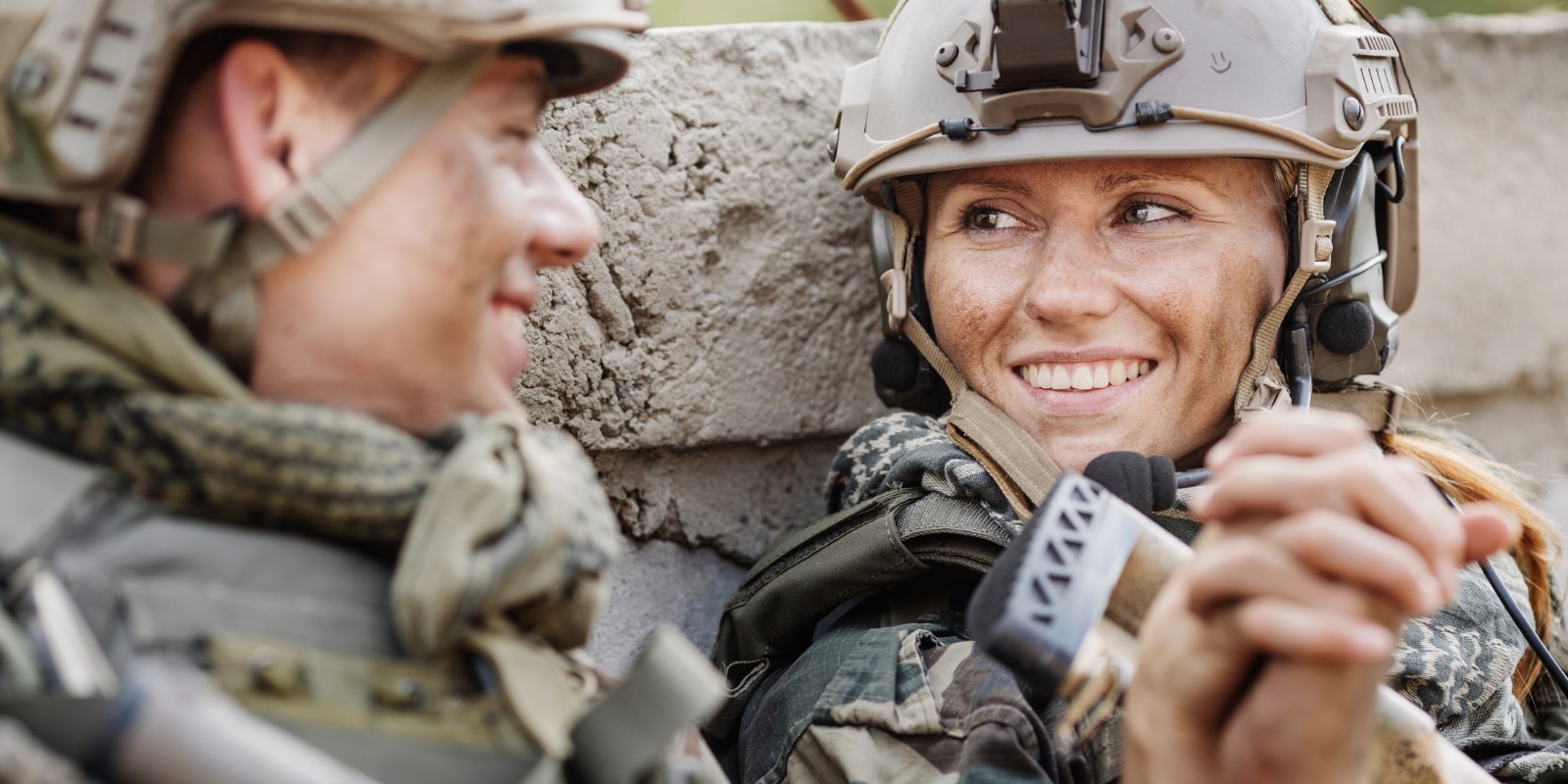
Military leaders are expected to exhibit strength and endurance, but outdated interpretations of these traits, rooted in traditional masculinity and emotional repression, damage mental health and erode operational readiness. To build truly cohesive units, defence organisations must change their leadership models to prioritise emotional intelligence, transparent communication, and genuine care for personnel.
Recruits are trained to live by the values and standards of the British Army, which have remained constant for years. However, unit culture actually foments the gap between what these values state and the standards that are accepted on the ground.
General David Morrison, former head of the Australian Army, famously stated: ‘The standard you walk past is the standard you accept.’ Morrison went on to add that, ‘Every one of us is responsible for the culture and reputation of our army and the environment in which we work. If you become aware of any individual degrading another, then show moral courage and take a stand against it.’
The issue is amplified by broader societal trends. At a recent House of Commons Defence Committee session, the Head of the Army, General Sir Roly Walker, addressed this particular tension: ‘The level of misogyny, the level of rancorous behaviour and belief systems, and the tension in wider society is something we have to accept as the environment from which we attract … I’ve got children in their early twenties. I’m well aware of what is going on with things like the manosphere and the sense of deepening rifts within young people, all of which is playing and accelerating through social media.’
It is difficult to recalibrate recruits into exemplary soldiers if junior leaders and instructors fall short on the values and standards that they are meant to instil.
The dual edges of traditional masculinity
Military culture has, to date, rewarded stoicism, physical toughness, emotional repression, and extreme self-reliance. In certain contexts, these traits serve a purpose and enable decision-making at pace and strict discipline under immense pressure. That being said, as Myriam Correa points out, these same traits are often tied to aggressive, controlling, and dominant behaviours.
‘Knowing the right occasion to dial up those traits is critical’, says Lindsay MacDuff, former UK military officer and host of The Culture Colonel podcast. ‘In contact operations, you need to dial up the stoicism and toughness. In the immediate aftermath of a contact or an operation, you need to take some time and find out who needs support. That won’t be achieved through stoicism or toughness, and certainly not through ‘take the man pill’ and all that kind of anachronistic awfulness.’
When high-stakes situations end, emotional control can quickly degrade into emotional avoidance. A modern military requires more dynamic leadership. Dr. Tomas Chamorro-Premuzic notes, in the Harvard Business Review, that ‘many competent men are also overlooked for leadership roles because they don’t match our flawed leadership archetypes — meaning, they are perceived as “not masculine enough”, or fail to display the very attributes that make leaders less effective.’ Placing outmoded bravado on a pedestal preserves the toxic perception that only ‘real men’ can lead, which naturally creates barriers for women and minority groups to advance towards leadership roles and discourages soldiers from seeking assistance for mental health concerns.
The hidden cost of silence
Informal cultural norms within the military suggest that service personnel experiencing a mental health challenge should ‘just get over it’. Countless studies show the devastating impact:
● Traditional masculinity creates psychological and behavioural effects, including increased aggression and resistance to help.
● Between 52–74% of military personnel experiencing mental health issues don’t seek help.
● Masculinity keeps military members from expressing anxiety and emotions, which aggravates mental health problems and has a negative impact on seeking help.
Dr. John Harrison astutely notes that the brain is an organ exactly like the heart or the lungs, yet there is no stigma resulting from heart or lung disease. Despite efforts like General Patrick Saunders’ It’s time to talk campaign, the fear persists that openness will bar personnel from promotion or deployment.
‘There’s an identity crisis going on for young men, and not knowing who they are and what good men look like’, MacDuff says. ‘Role models have become really important. There are pockets where leaders who are instructing those new recruits have fallen short of the values and standards of the organisation.’
After decades of wars, conflicts, and combat engagements to draw data from, it has been shown time and again that suppressing mental health issues can lead to unsafe decisions, burnout, and the development of long-term mental health conditions. Military leaders have a responsibility to lead by example so their teams learn how to express emotions and concerns about their mental state in healthy ways.
Rather than treating help-seeking behaviour as a weakness, leaders can adjust the perception by positioning it as a means of staying deployable and fit for duty. Healthy soldiers are not only good for mission readiness but also have happier personal lives, which, in turn, translates into better mission performance. In the case of military readiness, silence is a risk, not a virtue.
Reshaping culture through leadership behaviour
Trust and cohesion within a unit are not built by doctrine; they are built by leaders. If a leader dismisses a team member’s problem and tells them to ‘man up’ or ‘get over it’, the entire unit internalises that toxic response. This fractures the unit trust because the ultimate ask of military service is uniquely demanding. Service personnel are highly discerning and can easily spot selfishness or an absence of genuine care in command. As Simon Sinek notes, ‘Leadership is not about being in charge. Leadership is about taking care of those in your charge.’
To change these norms, the military must consider how it evaluates its commanders. General Sir Gwyn Jenkins explained this new approach in a House of Commons Defence Committee (HCDC) session: ‘Traditionally, when we have looked at our leaders, we tend to assess the outputs that they manage to create. We are not very good at assessing how they got there in the first place… We ran our first trial on the new assessment model for leadership in the autumn, and it produced some really interesting outcomes, not least of which was highlighting individuals that in the current reporting system would not be highlighted for promotion, and yet they create a fantastic, successful environment for their people.’
Leaders can practically drive this cultural shift without lowering standards by:
- Modelling a balance between operational composure and emotional openness.
- Normalising mental health support as routine professional maintenance rather than an emergency exception.
- Discussing wellbeing regularly as a core readiness and performance metric.
- Setting explicit expectations and standards for self-management and buddy care.
- Creating structured opportunities for one-on-one mental health check-ins, rather than waiting for a crisis.
Mother Teresa captured the essence of psychological safety and effective leadership when she said, ‘Honesty and transparency make you vulnerable. Be honest and transparent anyway.’
‘Mission resilience is about managing your emotions, while emotional suppression is about avoidance’, MacDuff concludes. ‘If you avoid it, you’re creating problems downstream. If you can learn to harness your resilience in a positive way, that can be a catalyst not just for yourself, but for your peers, as well, to be more emotionally intelligent leaders.’
Pearson offers a range of evidence-based tools to help military and public-sector leaders assess mental health, wellness, and leadership capabilities. Please reach out to learn more about how to build a stronger, more resilient command climate.