The Social Skills Improvement System Rating Scales (SSiS) offers detailed diagnostic information with direct links to intervention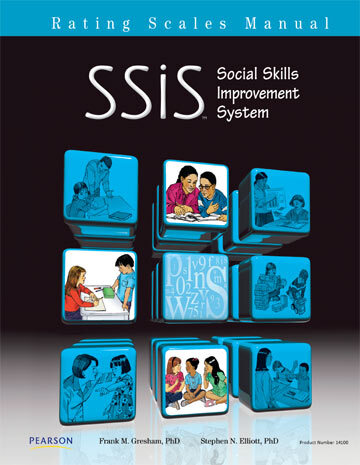 Activate to view the image in zoom mode
Social Skills Improvement System Rating Scales
SSiS
The Social Skills Improvement System Rating Scales (SSiS) offers detailed diagnostic information with direct links to interventionOverview
Product Details
Resources
- Publication date:
- 2008
- Age range:
- 3 years to 18 years
- Qualification level:
- B
Designed to replace the SSRS Social Skills Rating System, this substantially revised tool includes updated norms, improved psychometric properties, and new subscales
Benefits
- Enables targeted assessment of individuals and small groups to help evaluate social skills, problem behaviours and academic competence.
- The multi-rater SSIS Rating Scales helps measure:
- Social Skills: Communication, Co-operation, Assertion, Responsibility, Empathy, Engagement, Self-Control
- Competing Problem Behaviours: Externalising, Bullying, Hyperactivity/Inattention, Internalising, Autism Spectrum
- Academic Competence: Reading Achievement, Maths Achievement, Motivation to Learn
- Convenient Scoring Options - The SSiS Rating Scales may be hand-scored. For added convenience, use the ASSIST software which provides computer scoring and reporting, including individual, progress and multi-rater reports - and a direct link to suggested interventions with the SSiS Intervention Guide.
Features
- Teacher, parent and student forms help provide a comprehensive picture across school, home and community settings.
- Four new subscales (Communication, Engagement, Bullying, and Autism Spectrum)
- National norms for pre-school
- New items to provide greater coverage of important behaviours on existing subscales
- Revision of existing items to improve the alignment of content across forms
- Collection of reliability and validity evidence, including correlations with other measures and consistency with research on special populations
- Standard scores with percentile ranks
- Standardisation based on a nationwide sample matched to the US population estimates for race, region, and SES
- Combined norms and separate-sex norms