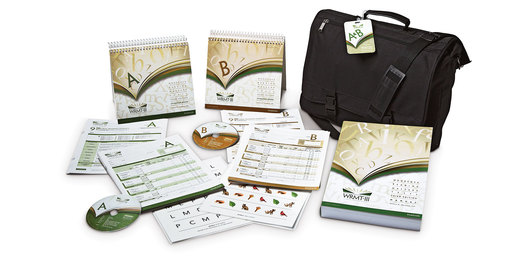
The Woodcock Reading Mastery Tests, Third Edition (WRMT-III) is used to assess reading readiness and reading achievement. Guidance on using this test in your telepractice
 Activate to view the image in zoom mode
Woodcock Reading Mastery Tests, Third Edition
WRMT-III
The Woodcock Reading Mastery Tests, Third Edition (WRMT-III) is used to assess reading readiness and reading achievement. Guidance on using this test in your telepracticeOverview
Product Details
- Publication date:
- 2011
- Age range:
- 4 years 6 months to 79 years 11 months
- Qualification level:
- B
- Telepractice:
- Guidance on using this test in your telepractice
The new WRMT-III offers you the latest revision of the WRMT, which set the standard for assessment of reading readiness and reading achievement.
Benefits
- Retains the format and structure of the WRMT-R/NU, while expanding the test’s range to give you even greater diagnostic power
- Evaluates struggling readers
- Identifies specific strengths and weaknesses in reading skills to plan targeted remediation
- Guides educational selection and placement decisions
- Screens for reading readiness
- Determines reading strategies for students with special needs
Also available in digital fomat via Q-global®
Features
The WRMT-III contains four new and five revised subtests.
- New subtests
- Phonological Awareness (4 years 6 months to 8 years 11 months)
- Listening Comprehension (6 years to Adult)
- Rapid Automatic Naming (4 years 6 months to 8 years 11 months)
- Oral Reading Fluency (6 years to Adult)
- Revised subtests
- Letter Identification (4 years 6 months to 6 years 11 months)
- Word Identification (6 years to Adult)
- Word Attack (6 years to Adult)
- Word Comprehension (6 years to Adult)
- Passage Comprehension (6 years to Adult)
Additional Features
- Comprehensive, contemporary reading coverage based on extensive research
- All new photorealistic stimulus art to more readily engage children
- Two parallel forms that can be used to monitor reading growth
- Test items arranged in order of increasing difficulty
- Basal and ceiling rules and grade-specific start points to help you administer only those items within the examinee’s functional range
- Item-level error analysis on Listening Comprehension, Passage
- Comprehension, and Phonological Awareness
- Within-item-level error analysis on Word Attack, Word Identification, and Oral Reading Fluency
- New norms: conducted from July 2009 through June 2010 on a nationally representative sample of 3,360 individuals aged 4 years 6 months through 79 years 11 months.