Doors and People - Reviews

Dr Carol A Ireland, Vice-Chair of the Division of Forensic Psychology

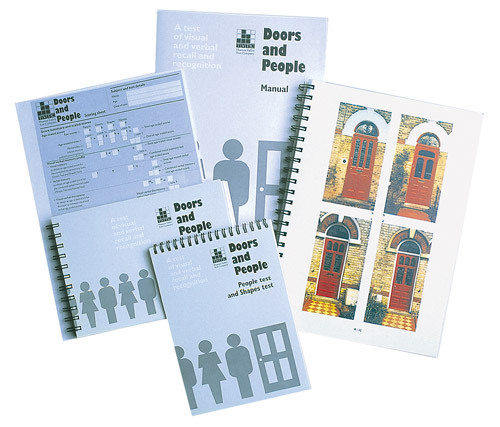
The Doors and People is really what it states: Doors, and People. It is an assessment of long-term memory, specifically episodic memory, taking a broad-based view. It has the benefit of a number of studies that have explored its applicability, and it comprises of four parts. The first is an assessment of an individual’s ability to recognise visual stimuli, in this instance coloured photographs of doors that they have seen before, and provided as part of the assessment. The second is the recall of visual stimuli, in this instance the drawing of four patterns, and their ability to do this from memory. The third is an assessment of their ability to recognise verbal information. Here the individual is asked to read a series of names, and to then recognise these names from a list. Finally, it assesses the ability to recall verbal information, and where the individual is asked to recall the names of four people that they are given.

I have used this assessment for a number of years, with a range of clients both in the community and closed settings. One of the real strengths of this tool is its accessibility to the client. In my experience of conducting cognitive assessments, this test does not appear overwhelming for the client in regard to presentation and content. As such, its layout appears accessible to the client, and it is one which clients tend to enjoy and engage with. The clinical data provided by the Doors and People is very helpful. For example, with my client group, it can be helpful to know if they are able to recognise information reasonably or extremely well, or if they have a real challenge in recalling information. This ensures I tailor any interventions to meet the client’s needs, and in order to maximise success. Furthermore, the test is straightforward to use, and does not appear to disengage the client. It is relatively quick to administer, taking around 40 minutes. This can be a real advantage when working with some clients who benefit from shorter engagement sessions.

The scoring of the assessment can at first seem a little tricky, and can be overly complex. As such, there needs to be care when scoring, and any later interpretation. As a recommendation, this assessment should not be used without a reasonable knowledge of memory theory. Yet, such an observation would not be unique to the Doors and People, and any interpreter of a tool is required to know the theories upon which the tool is developed, as well as the limitations of any such approaches. There can also be some occasional instances where the scores achieved can fall outside of the normed sample. Yet, this is not frequent. Ultimately, it can offer a wealth of information for the clinician, and can be a real asset to understanding a client’s long-term memory. It can further offer the opportunity to explore any potential patterns in the client’s episodic memory, whilst reducing any potential sense of failure in a client who may present with challenges in their ability.

Date Added: 11 March 2011

Key Information

Description

Assess long-term memory. Designed for use both as a clinical tool and as a research instrument.

Author(s)

Alan Baddeley

Hazel Emslie

Ian Nimmo-Smith

Publication Year

2006

Age Range

5 years and 1 month to adult

Administration

Individual - 35 to 40 minutes

Qualification Code

CL1


£314.00 (Complete kit price from)