Browser does not support script.
Dr. Carol A. Ireland, CPsychol, MBA, Forensic Psychologist, Chartered Scientist, University of Central Lancashire and CCATS (Coastal Child and Adolescent Therapy Services)
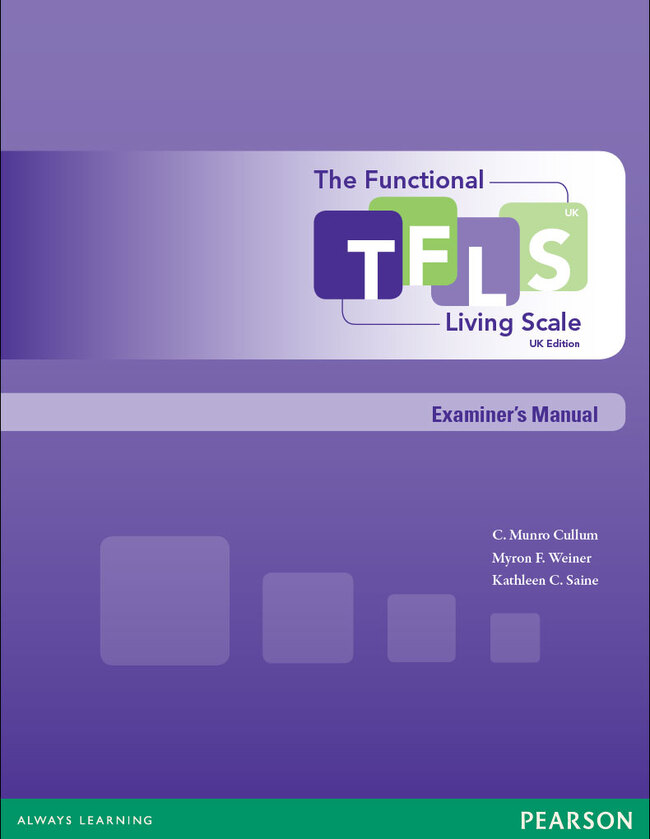
This assessment is designed as a brief measure of performance based functional competence for individuals who may suffer from a variety of neurodevelopmental and neurodegenerative disorders. It assesses important aspects of their self-care and ability to function independently, focusing on paying bills, remembering instructions over a short time period, and performing basic money transactions. It was initially developed through research in to Alzheimer’s, and where it was regarded to be a more adept assessment of cognitive decline in activities of daily living. Following this initial development, the focus of the instrument expanded to other groups, such as those with intellectual disability, traumatic brain injury and schizophrenia. It therefore, has a much wider remit, and where it can now be utilised with a wide population, from 16 to 90 years, and where an assessment of functional ability is felt to be helpful. It is a brief instrument, taking only 15 minutes to administer.It does have helpful applicability with the relevant populations, such as assisting in questions of competence and levels of independent living. It is however more suited for community populations, including community forensic populations, as opposed to clients in a secure setting, and where their daily living as assessed by this tool may be more restricted. A strength of this assessment is its focus on the more complex skills required for independent living, and which are more cognitively demanding. It can therefore be considered a robust tool for assessing these more multifaceted components, with a general opinion that it is these components which can first be noted to disintegrate with neurodegenerative disorders, as opposed to the more basic aspects of daily care. As such, there is the potential to identify difficulties much earlier, and to then put in place supportive measures and interventions for the individual. It also moves away from a traditional over-reliance on the self-report of others when making a judgement on these skills, and focuses more directly on the observed ability in the client. Outside of its clinical utility, a further advantage is its accessibility for the client by exploring their competence without potentially evoking a sense of prolonged failure. If a client presents as unsuccessful in some areas they can quickly move to another aspect of self-care and/or ability. It can further be an engaging assessment, and where the client is requested to demonstrate ability in a range of different ways.Overall this is a helpful instrument to determine the aspects of complex daily living that an individual can readily undertake, and areas where further support may be needed. It is easily assessable for the examiner, with helpful instructions and reminders as you progress through the instrument. Yet, this is only achieved by the examiner fully familiarising themselves and practicing the administration prior to engaging with a client. A point of observation with this instrument however is the need for the examiner themselves to provide further materials. Whilst these are generally not problematic, there is a need to purchase items such as a timer, a stop watch and a zip-top bag. Whilst an examiner can source these, it would be more helpful if these were provided, even at an additional cost. Yet, this should not deter a potential purchaser, as the benefit of using this tool far outweighs such considerations.
Write your own review
An ecologically valid, performance based measure of functional abilities with an emphasis on instrumental activities of daily living (IADL) skills
C. Munro Cullum
Kathleen C Saine
Myron F Weiner
2012
16 years to 90 years 11 months
Individual - 15 minutes
CL3
0 items : £0.00
This year's conference will be held in central London on Tuesday, November 19 and is open to all health, educational and research professionals who have an interest in Cogmed and/or working memory.
Warning: png images may not display correctly as your browser does not support JavaScript.
Warning: your browser does not support JavaScript.